Blog
Insights
What Construction Can Learn from Retail's Click & Collect Revolution
Click & collect reshaped consumer retail in under a decade. The same model is now solving material access problems on construction sites.

Mark Pettit
Chief Commercial Officer
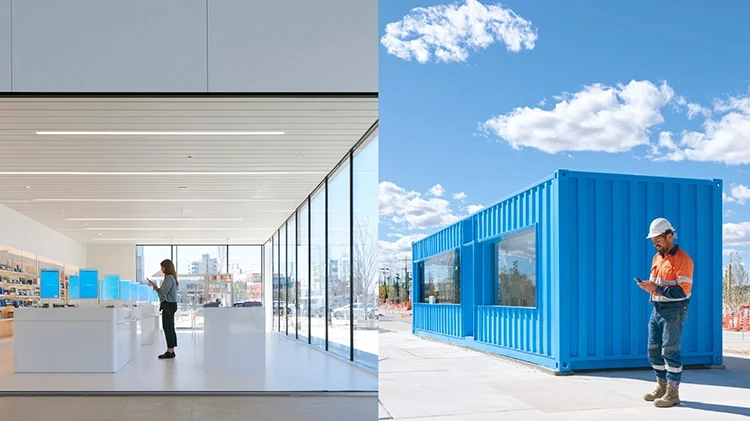
Retail Figured This Out Years Ago
Ten years ago, click & collect was a novelty. Order online, pick up in store. Convenient, but not essential. Today it's worth £42.4bn a year and accounts for 8.4% of total retail spending in the UK. Every major supermarket, every DIY chain, most fashion retailers. The model won because it solved a genuine problem: people wanted the product selection of online shopping with the immediacy of physical collection. No waiting for a courier. No missed deliveries. Just order, get a notification, go and collect.
The logistics behind it evolved fast. Dedicated collection points. Automated notification systems. PIN-based access lockers. Real-time inventory management synced across channels. Retailers invested heavily because the data was clear: click & collect customers spent more, visited more often, and were cheaper to serve than home delivery customers.
Construction Has the Same Problem, Worse
Now think about a construction site. Workers need specific materials, often urgently, often at odd hours. The traditional supply chain gives them two options: wait for a scheduled delivery that may or may not contain what they need, or send someone in a van to get it. Neither is efficient. Neither gives the worker control over when and what they collect. Neither generates any useful data.
The parallels with pre-click-and-collect retail are striking. Products sitting in warehouses miles from the point of need. Manual processes full of friction. Zero visibility for the end user on what's available and when. The only difference is that in construction, the consequences of a failed fulfilment are more severe. A missing component doesn't just mean a disappointed customer, it means an idle crew and a slipping programme.
Applying the Retail Playbook
Opus takes the click & collect model and applies it to environments that retail never had to deal with. Remote locations. 24-hour operations. Multiple user groups with different access permissions and spend limits. Security requirements that go well beyond a collection counter.
The user experience mirrors what any consumer would recognise. Browse a catalogue on your phone. Select what you need. Choose a collection time. Get a PIN sent to your phone. Walk into the store, scan your items, walk out. The difference is that behind the scenes, every transaction feeds into a controlled procurement system with full audit trails, spend controls, and real-time stock management.
Workers get the convenience and autonomy they're used to as consumers. Contractors get the cost control and visibility they've been missing on site.
Why It Works Better Than You'd Expect
One of the things we hear most from clients after deploying Opus is surprise at how quickly adoption ramps up. Site teams don't need training on how click & collect works. They already know. They do it every week at Argos or Screwfix. The mental model is already there.
That familiarity removes one of the biggest barriers to technology adoption on construction sites: the learning curve. There's no complex onboarding process. No resistance from workers who feel like they're being given another system to learn. It's just ordering and collecting, the same way they do it everywhere else in their lives.
The Data Dividend
Retail's real transformation from click & collect wasn't the collection model itself. It was the data. For the first time, retailers could see exactly what each customer ordered, when they collected, how often they returned, and what they bought next. That data reshaped inventory planning, store layouts, and promotional strategies.
The same thing happens on site. Once every material transaction goes through Opus, contractors get granular visibility into consumption that simply didn't exist before. Which teams use the most consumables. Which items run out fastest. Where demand spikes correlate with programme phases. OpusEye™ analyses these patterns and turns them into stock recommendations, pricing adjustments, and reorder triggers. It's the same data-driven approach that transformed retail, applied to an industry that's been flying blind.
In Summary
Retail proved that click & collect isn't just a convenience feature. It's a fundamentally better fulfilment model: faster for the user, cheaper for the operator, and rich with data that drives smarter decisions. Construction is now discovering the same thing. The sites that adopt it first will have a meaningful advantage in cost control, worker satisfaction, and operational efficiency. The ones that don't will keep sending vans to the wholesaler.
Mark Pettit
Chief Commercial Officer
Share