Blog
Insights
Autonomous Fulfilment Is Coming to Construction. Here's What That Means
Retail and logistics embraced autonomous operations years ago. Construction is finally catching up, and the impact on site-level supply chains is significant.

Mark Pettit
Chief Commercial Officer
Retail has self-checkout. Logistics run automated warehouses that pick and pack thousands of orders a day without human intervention. Manufacturing has entire production lines that operate in the dark overnight. And then there is construction, an industry that spends billions annually on material procurement, yet still relies on someone with a clipboard, a delivery vehicle and a phone to call to get the right product to the right site.
That's starting to change, and faster than most people in the sector realise. Autonomous fulfilment infrastructure, systems that manage, secure, and distribute inventory without a permanent staff presence are already operational on construction sites across the UK. Not in a test, not in a lab, but on actual projects, delivering measurable commercial returns.
Forget the Robots. Think Smarter.
When people hear "autonomous fulfilment" they tend to picture robotic arms or metres of conveyor belts. Fair enough, that's what it looks like in an Amazon warehouse. On a construction site, the reality is more pragmatic. And arguably, more useful.
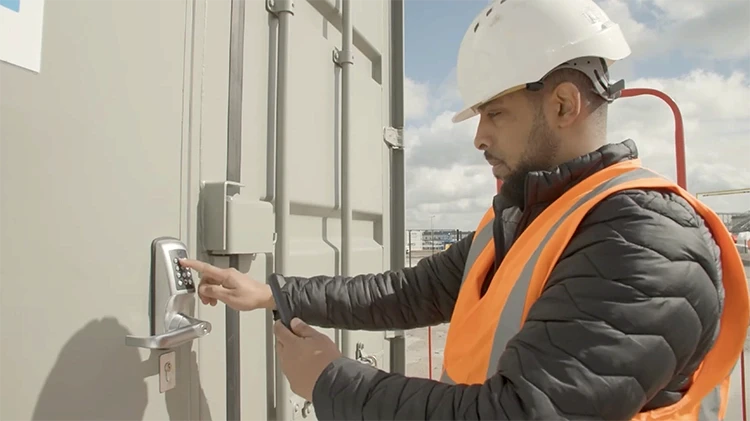
What it actually means is taking a standard shipping container, an existing storeroom, or a purpose-built unit and turning it into a fully controlled, staffless supply point. Workers order what they need online and they collect it using their secure, single-use PIN. With every entry, every item, every transaction is tracked digitally. No storekeeper, no keys floating around, no mystery about where the stock is.
Underneath that sits an infrastructure layer: IoT-connected smart locks, CCTV with entry logging, barcode scanning for item-level tracking, and a cloud platform with API connections into whatever ERP or WMS the contractor already runs. The intelligence layer handles demand forecasting, reorder automation and performance analytics.
This is the model we've built with Opus at Sellfware Technology. It's a patented platform, purpose-engineered for environments where conventional retail or warehousing models simply don't work: remote sites, round-the-clock operations, and locations where paying someone to staff a store full-time makes no commercial sense.
Why Construction Took So Long
The construction industry's relationship with technology is well documented and not in a flattering way. Fragmented supply chains, project-based commercial structures and a workforce scattered across dozens of locations at any given time all create friction. Plenty of contractors still manage site inventory on spreadsheets. Some don't manage it at all, defaulting to reactive purchasing when someone runs out.
There is a perception problem too. People associate autonomous systems with massive capital outlay and months of integration work. In reality, a SaaS-based platform like Opus run on annual subscription. Deployment takes days, not quarters. And the platform plugs into existing procurement systems rather than ripping them out.
The Commercial Argument
Strip away the technology and the business case comes down to four things. Cost reduction: you're eliminating staffed stores, cutting emergency procurement spend and reducing delivery miles by holding stock where it's actually needed. Revenue protection: when materials are there when crews need them, work doesn't stop. That sounds obvious, but the cost of unplanned downtime on a major project is brutal.
Then there's data: Real-time reporting on stock levels, consumption patterns, user activity, spend by team, spend by individual. Most site stores today capture none of this. Finally, ESG: fewer vehicle movements, optimised stock levels that reduce waste, and documented audit trail your sustainability team can actually point to in a report. Not greenwashing, but actual operational change.
Where This Goes Next
The trajectory is fairly obvious. As AI gets better, these supply points will shift from reactive restocking to genuinely predictive procurement, ordering materials before a shortage is even possible. Tie that into project scheduling software and you can align inventory dynamically with construction phases, so the right materials arrive in step with the project phases.
For contractors weighing up where to invest in technology this year, autonomous fulfilment sits in a sweet spot: proven in the field, commercially compelling, and directly aligned with the industry's push toward digitalisation and net-zero targets.
In Summary
Autonomous fulfilment in construction isn't a concept on a roadmap. It's deployed, it's working and it's changing how materials reach the people who use them. The real question for contractors isn't whether to adopt it, it's how quickly they can roll it out across their project portfolio before their competitors do.
Mark Pettit
Chief Commercial Officer
Share