Blog
Insights
How to Stop Construction Material Theft Without Hiring a Night Guard
Construction theft costs the UK over £1 billion a year. Here's how staffless, fully tracked supply points stop it without adding security headcount.

Steve Murray
Business Development Director
The Scale of the Problem
Construction site theft costs the UK industry over £1 billion a year. That figure accounts for stolen materials and tools, project delays, and the insurance premium increases that follow every claim. Over 11,000 incidents are reported annually, and industry estimates suggest the true number is two to three times higher, because smaller subcontractors routinely absorb losses rather than deal with the paperwork. Ninety-two percent of construction companies have experienced theft on site. This isn't bad luck. It's an industry-wide exposure.
The traditional response is to hire security. A night guard, a gatehouse operative, someone on-site after hours to deter opportunists. It works, to a point. But it's expensive, difficult to scale across a multi-site portfolio, and does nothing to address the internal theft and stock shrinkage that doesn't happen at 2am, it happens quietly, across hundreds of small transactions, by people who are supposed to be there.
The Two Types of Theft Nobody Talks About Separately
Site theft tends to get discussed as a single problem. It isn't. There's external theft: organised criminal networks and opportunists targeting plant, copper, power tools, and materials overnight. And there's internal shrinkage: consumables, PPE, and small tools that walk out legitimately or otherwise, without any record of who took them or why.
Most security investment addresses the first type. Fencing, CCTV, guards, alarm systems. These are worthwhile, but they leave the second problem completely untouched. When there's no inventory system tracking what's been collected against who collected it, shrinkage is invisible. It shows up eventually, in a stockcount that doesn't add up, or a delivery that seems too small for what was actually used on site.
Why the Storeroom Is the Weakest Link
The site storeroom is where both problems converge. It's the physical location where materials are most concentrated and most accessible. On most sites it operates on trust: a storekeeper issues items during working hours, someone signs a sheet, and that's the extent of the audit trail. Outside of those hours, access control ranges from a padlock to nothing at all.
That's not a security setup. It's an open invitation.
What Controlled Access Actually Looks Like
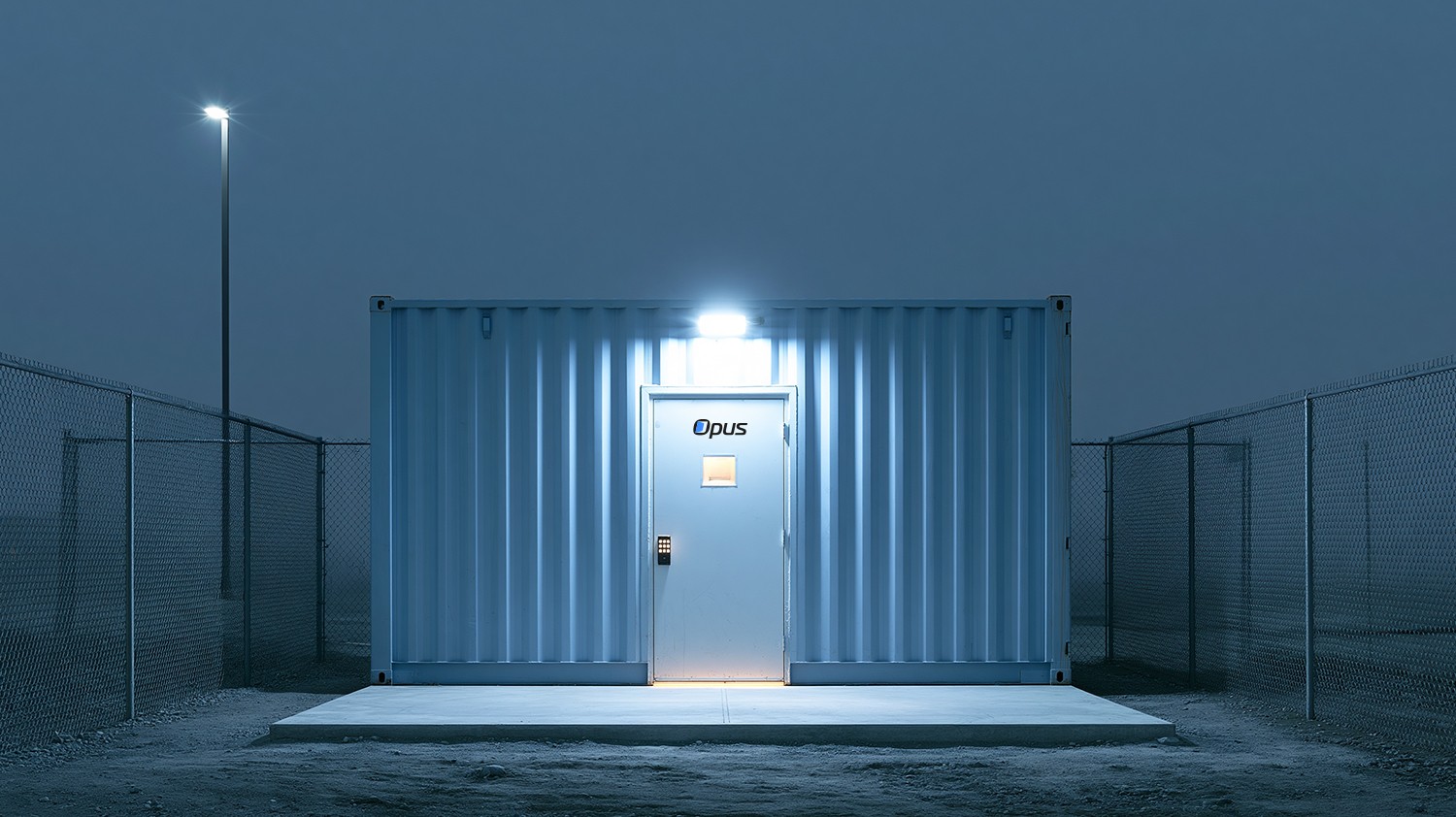
Opus converts a storeroom, shipping container, or dedicated unit into a fully controlled, staffless supply environment. Every user has their own account with defined spend limits and authority levels. They order what they need from their phone, receive a single-use PIN by SMS, walk in, scan their items, and walk out. The smart lock logs every entry. CCTV records every movement inside the store. Every transaction is attributed to an individual, in real time.
There is no anonymous access. There is no "sign it out later." There is no possibility of materials leaving without a digital record attached to a named person.
That single change addresses both types of theft simultaneously. External access is controlled by PIN authentication and alarm systems that activate automatically when the store is empty. Internal shrinkage becomes traceable the moment every collection is logged against an individual account. The data doesn't lie, and people behave differently when they know it's being recorded.
The Insurance Argument
Beyond the operational benefits, there's a commercial case that often gets overlooked. Documented audit trails, CCTV coverage, and access control systems are exactly the kind of evidence insurers want to see when assessing a site's risk profile. Contractors running Opus can demonstrate precisely who accessed what, when, with full transactional records. That's a meaningful conversation to have at renewal time.
The data from live deployments backs this up. On the HS2 supply chain, ALIGNJV found that a quarter of all Opus orders were placed outside of working hours, with fifteen percent coming in at weekends. That's a significant portion of total demand that would previously have gone unmet or been handled through untraceable workarounds. With Opus, every one of those transactions is logged, attributed, and auditable.
In Summary
You don't need a night guard to secure your site store. You need a system that makes every transaction traceable, every access controlled, and every discrepancy visible before it compounds into a significant loss. Opus provides that infrastructure from day one, across as many sites as you need, without adding headcount. The theft doesn't stop because someone is watching. It stops because there's nowhere for it to hide.
Steve Murray
Business Development Director
Share