Blog
Insights
Pop-Up Stores on Construction Sites: A New Revenue Channel for Suppliers
Distributors positioning staffless stores at their customers' sites are seeing stronger relationships, higher order frequency, and lower last-mile-costs.

Ross Bartlett
Chief Sales Officer
A Different Angle on Autonomous Fulfilment
Most of the conversation around staffless stores on construction sites focuses on the contractor: the team running the project, managing the workforce, trying to keep materials flowing. And that makes sense. They’re the ones with the operational pain.
But there’s another player in this equation who stands to benefit just as much, possibly more. The supplier.
The Supplier's Problem
If you’re a distributor or merchant serving construction, you know the drill. Your customer base is scattered across dozens of sites, many of them in locations that are expensive and time-consuming to reach. You’re running delivery routes that get disrupted by traffic, site access restrictions, and last-minute changes to drop-off points. Your customers place emergency orders at odd hours and expect them fulfilled immediately.
Meanwhile, your margins are under pressure. Fuel costs are up. Driver availability is tight. Every failed delivery or returned order eats into an already thin margin on site consumables. And the relationship with your customer lives or dies on availability. If you can’t get them what they need when they need it, someone else will.
The Forward Stock Location
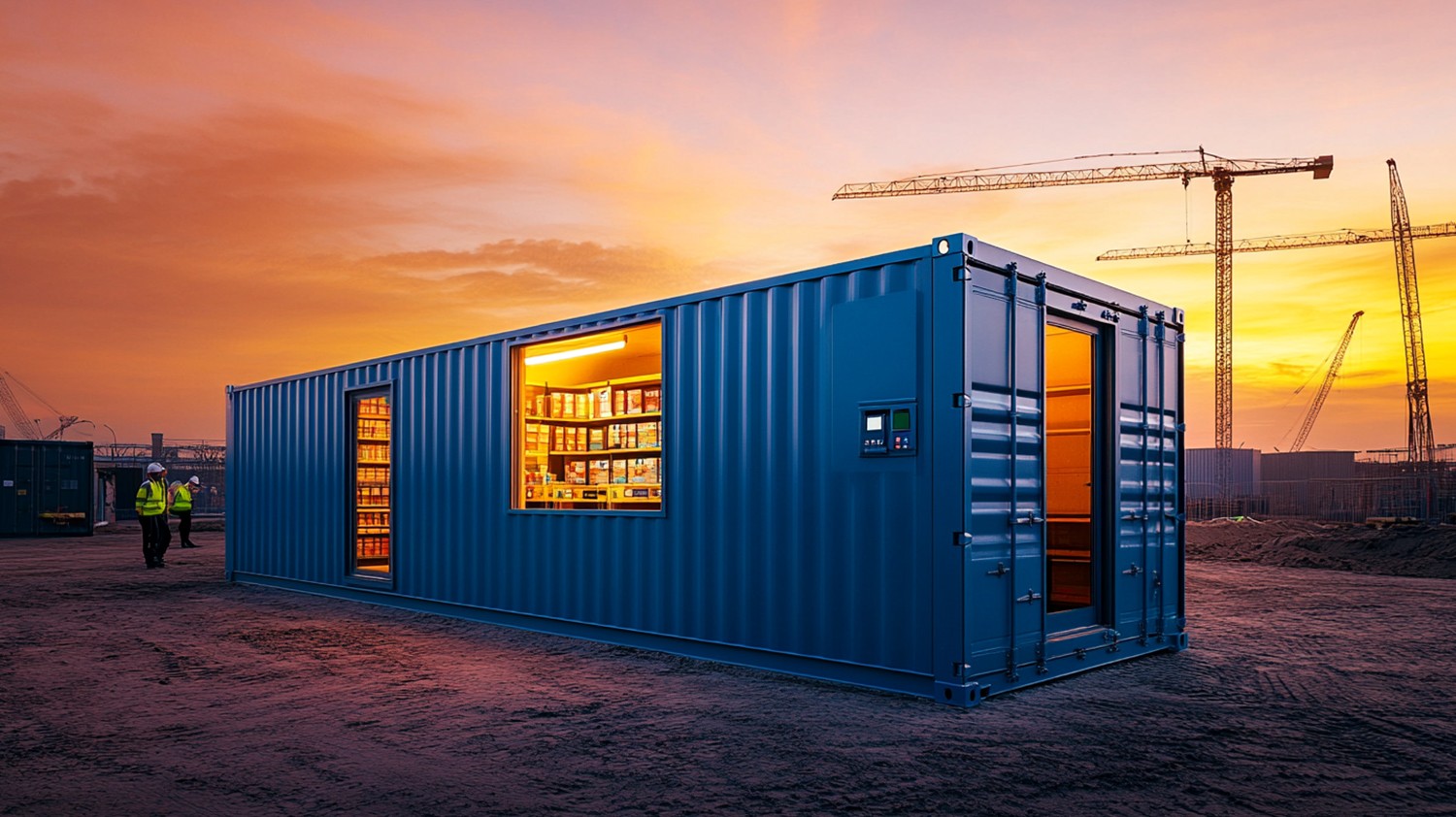
Now imagine a different model. Instead of delivering to the site three times a week from a warehouse twenty miles away, you put a staffless, Opus-powered store directly at the customer’s site. Stock it with the consumables and MRO products they order most frequently. Let their teams order and collect whenever they need to, 24/7, using click & collect with PIN access.
You’ve just done three things at once. Reduced your last-mile delivery costs dramatically, because bulk replenishment of one on-site location is far cheaper than individual deliveries. Increased your order frequency, because the friction of ordering has dropped to near zero for the customer. And embedded yourself physically in the customer’s operation in a way that makes switching suppliers genuinely inconvenient for them.
That last point is the strategic one. A staffless store on your customer’s site isn’t just a distribution channel. It’s a relationship lock-in that benefits both parties.
How It Works in Practice
VJ Technology, one of the early adopters of this model, deployed Opus-powered pop-up stores at several of their key customer sites. The stores operate entirely without staff. VJT manages the stock remotely through the Opus dashboard, setting catalogue, pricing, and reorder levels from their own office. Authorised site personnel order and collect using the standard Opus click & collect process.
For VJT, the commercial impact was immediate. Order frequency went up because workers could get what they needed without waiting for a scheduled delivery. Returns went down because the people using the products were selecting and collecting their own items. And the cost of serving each site dropped because VJT eliminated the majority of individual delivery runs.
For the customer, it meant having their supplier’s stock permanently available on their site, accessible around the clock, without having to manage or staff the store themselves with the added bonus of zero wastage when the project finishes.
The Economics
The financial model is straightforward. Opus operates on a SaaS subscription, so there’s no heavy capital outlay. The supplier pays a monthly platform fee and manages their own stock investment. The container or storeroom is either provided by the supplier as part of their service offer or already exists on the customer’s site.
The savings come from three places: reduced delivery costs, since you’re replenishing one location in bulk rather than running multiple individual drops; reduced returns and errors, since the worker selects and collects their own items; and increased wallet share, since availability and convenience drive higher order volumes.
For distributors serving construction, facilities management, or field services, this model turns every customer site into a revenue-generating retail point that runs itself.
In Summary
Suppliers have spent years trying to solve the last-mile problem with better routes, faster vans, and more drivers. The smarter move is to eliminate the last mile altogether. A staffless pop-up store at the customer’s site, powered by Opus, gives distributors a lower-cost, higher-frequency, stickier sales channel than anything a delivery schedule can offer.
Ross Bartlett
Chief Sales Officer
Share